WHOOP Crisis Communication Plan
Crisis Communication Strategist
ROLE
Writer
DURATION
Fall 2025
TOOLS
Canva
OVERVIEW
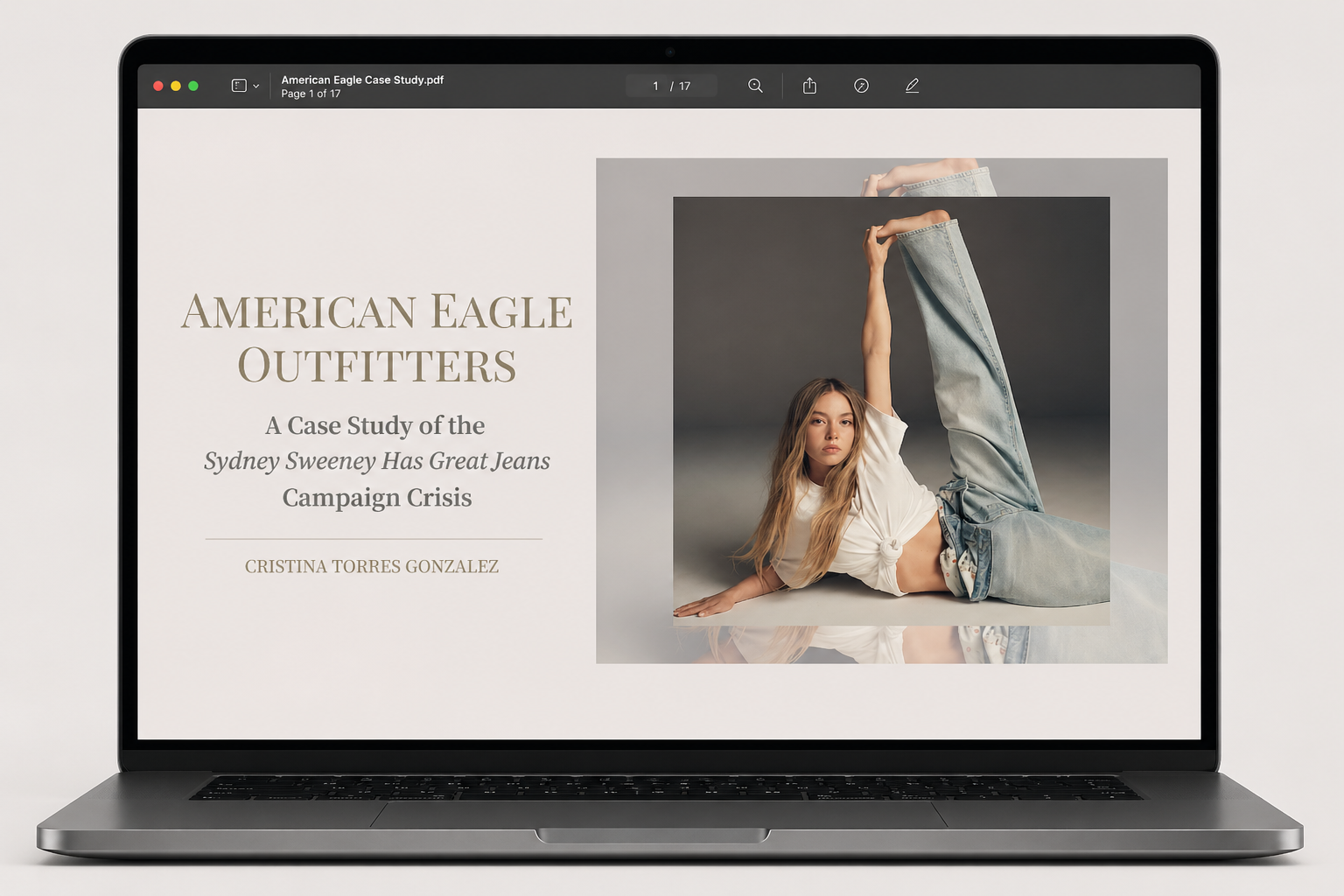
This case study analyzes American Eagle’s 2025 “Sydney Sweeney Has Great Jeans” campaign and the crisis that followed, where a simple advertising message evolved into a large-scale cultural conversation.
The project focuses on how communication strategies, public interpretation, and media dynamics shaped the campaign's outcome.
SITUATION
American Eagle launched a denim campaign centered on the phrase “great jeans,” which audiences quickly reinterpreted as “genes,” linking it to sensitive discussions around beauty standards and identity.
What started as a brand message became a public communication issue, driven by social media amplification and media framing.
COMMUNICATION CHALLENGE
How can a brand effectively communicate its intended message when audiences reinterpret it in unintended—and potentially harmful—ways?
STRATEGY
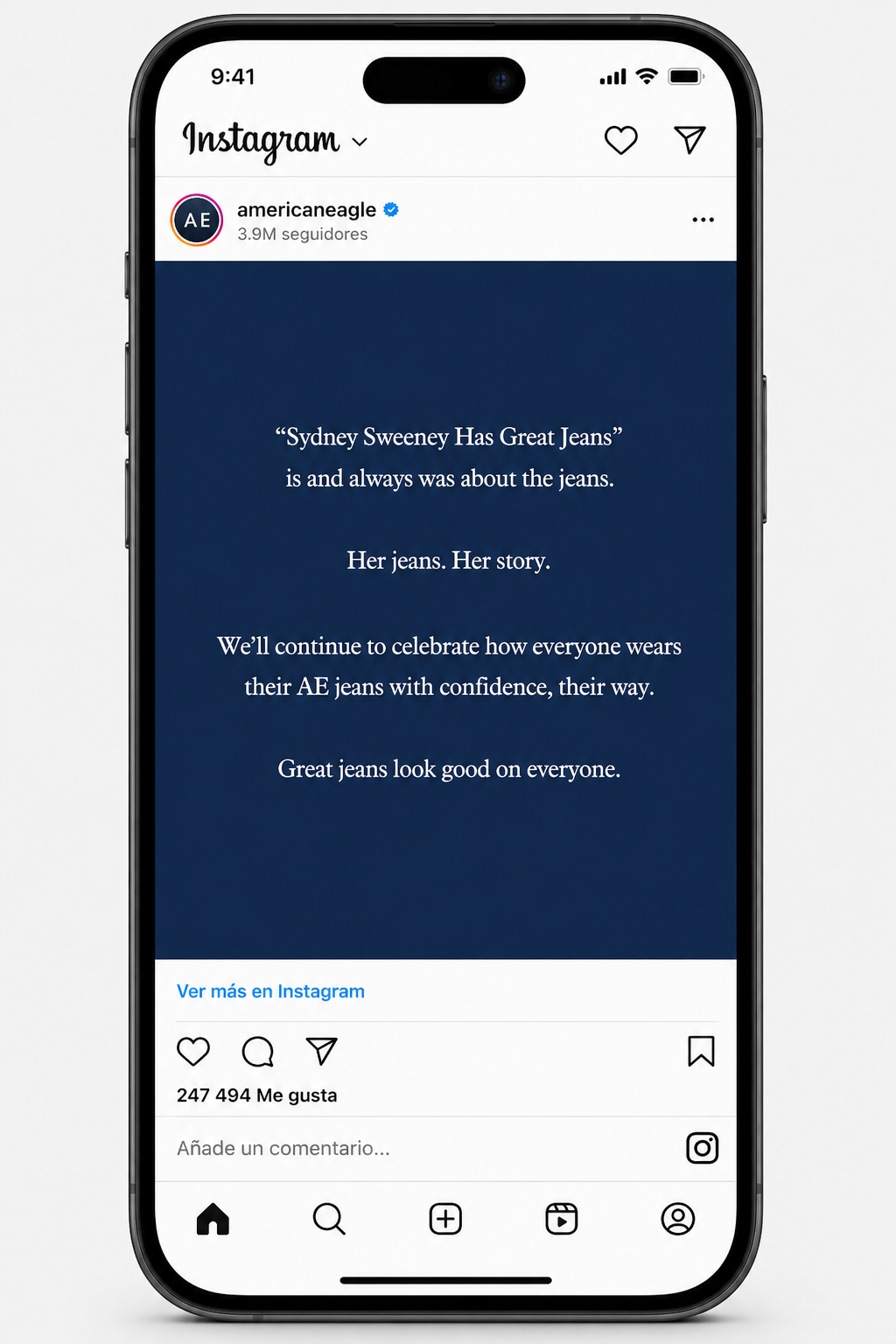
American Eagle implemented a controlled communication strategy focused on message discipline and visibility:
Maintained a single, consistent narrative across all platforms
Avoided reactive measures such as an apology or campaign removal
Minimized direct engagement to avoid amplifying the controversy
Leveraged ongoing media attention to increase reach and awareness
BIG IDEAS, REAL IMPACT
This project highlights that brands don’t control meaning—audiences do. A simple message can quickly evolve through social media and cultural interpretation.
The campaign shows how controversy can drive visibility and growth, bringing increased engagement and new customers, even amid backlash.
At the same time, it reveals the tradeoff between short-term success and long-term trust, emphasizing that effective communication depends on both message control and alignment with brand values.
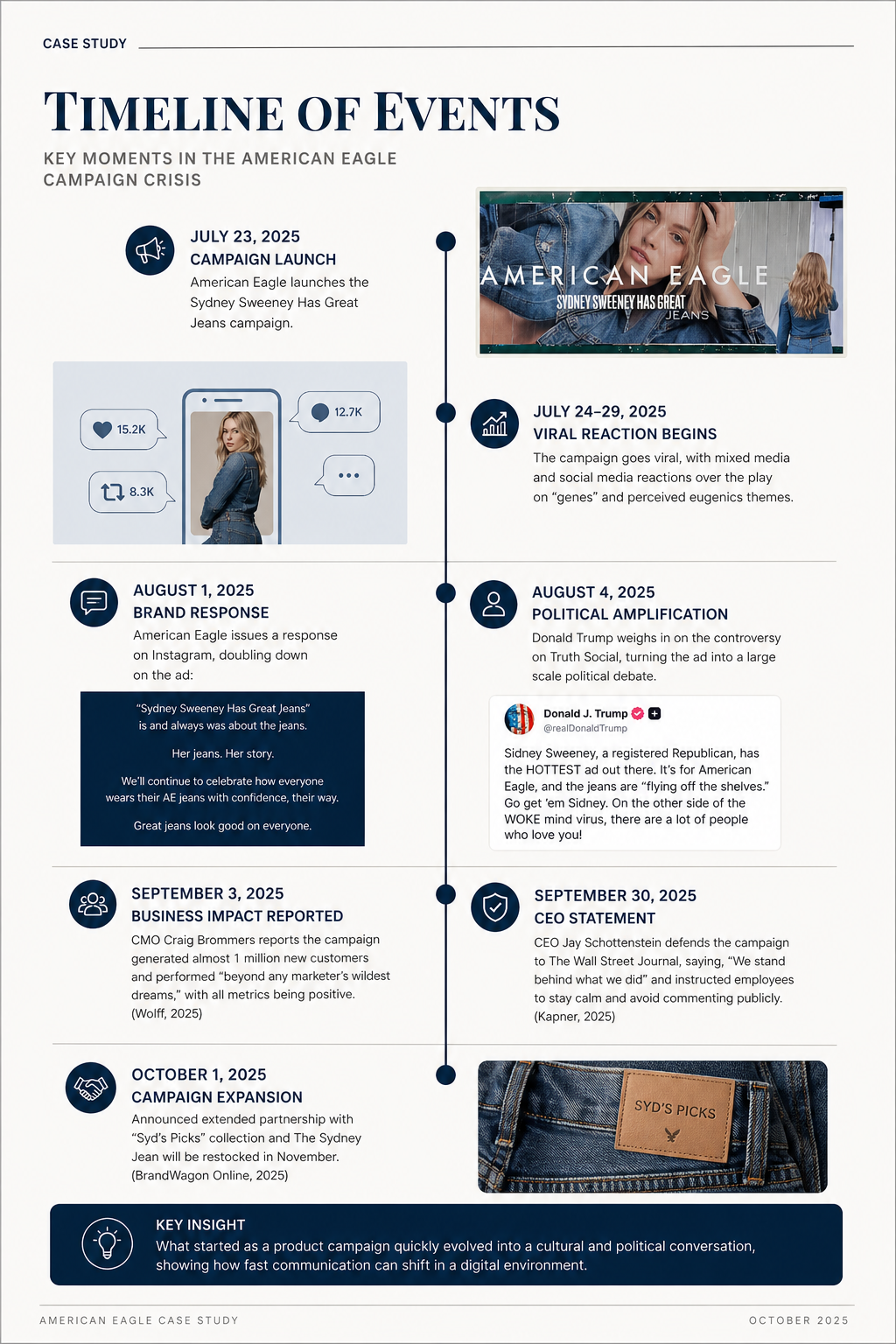

Key Insight
Public perception—not brand intent—defines the narrative.
Strong message consistency helped the brand stay in control despite backlash.

Results
Increased visibility and engagement
~1M new customers reported
Mixed reputation impact long-term
CONCLUSION
The American Eagle campaign illustrates how quickly a brand message can evolve once it enters the public space, especially in a media environment driven by social sharing and cultural interpretation. While the company maintained control through consistent and restrained communication, the situation revealed the limits of message ownership and the importance of anticipating how audiences may perceive meaning beyond intent.
Ultimately, the campaign’s success in driving visibility and business results contrasts with its more complex reputational impact, highlighting a key reality in communications: attention does not always equal alignment. This project reinforces that effective communication requires not only clarity and consistency but also awareness of cultural context and a strong connection between messaging and brand values.