WHOOP Crisis Communication Plan
Crisis Communication Strategist
ROLE
Writer
DURATION
Fall 2025
TOOLS
Canva
OVERVIEW
For this project, I created a crisis communication plan for WHOOP, a brand built entirely on trust and personal data.
I focused on how communication can protect that trust in high-pressure situations.
PROBLEM
I explored a scenario where sensitive user data (like sleep and recovery metrics) is exposed through a third-party breach.
This would immediately impact:
How users feel about their privacy
How much they trust the brand
How the brand is perceived publicly
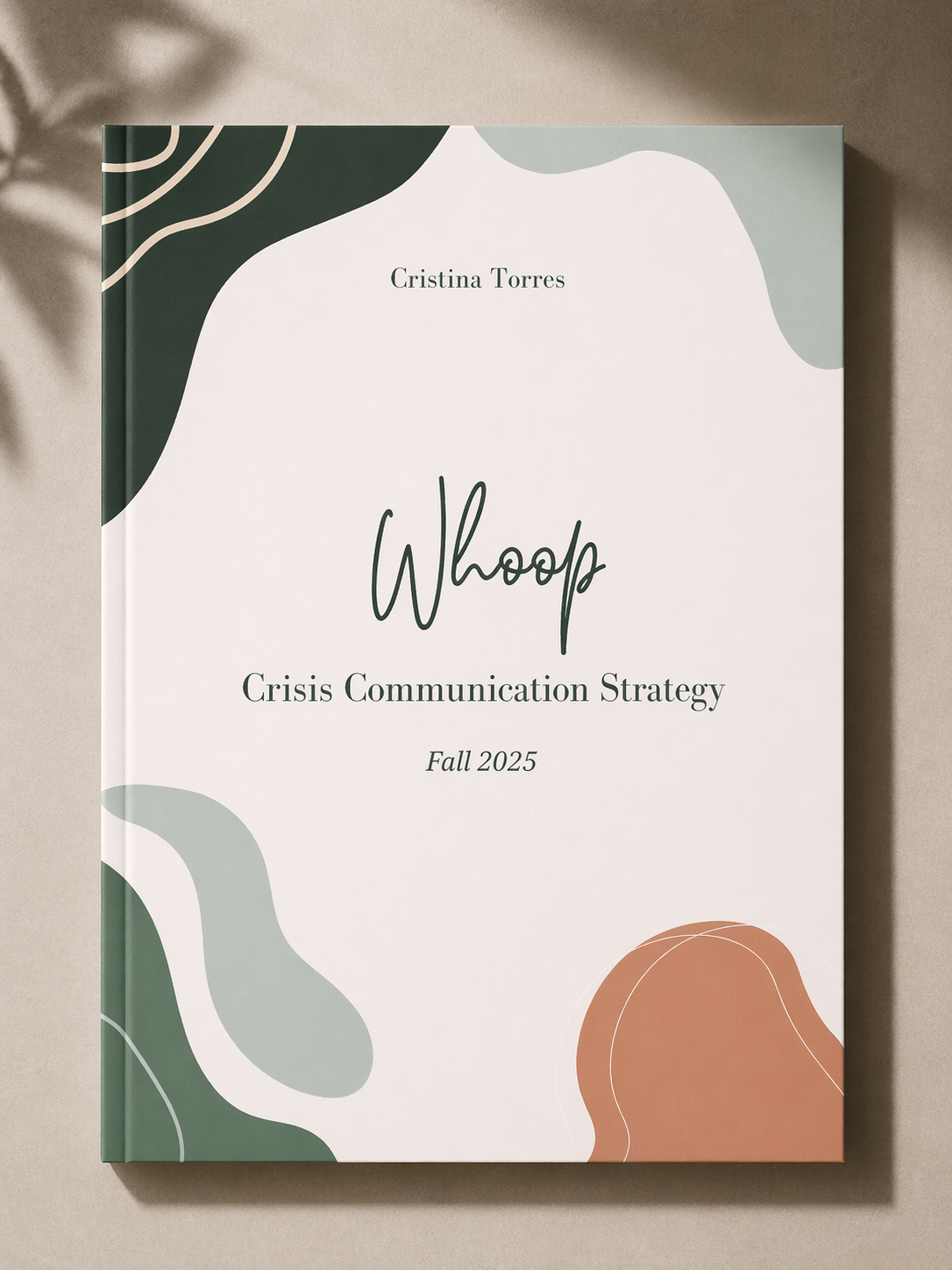
MY APPROACH
I analyzed WHOOP’s brand, audience, and reliance on sensitive data to understand the risks they face. From there, I built a structured crisis plan that includes key messaging, stakeholder communication, media strategy, and response timelines.
I focused on clarity and organization, making sure each step, from the first response to long-term recovery, was actionable and easy to follow. I also developed real deliverables like a press release, social media responses, and website updates to make the plan feel realistic and applicable.
BIG IDEAS, REAL IMPACT
This plan is centered around trust, transparency, and speed. By responding within the first 60–90 minutes, maintaining consistent messaging, and prioritizing user support, WHOOP can reduce confusion and protect its reputation.
The strategy ensures that all audiences, from members to media, receive clear and accurate information, helping prevent misinformation and rebuild confidence. Overall, the plan shows how strong communication can turn a crisis into an opportunity to reinforce accountability and long-term trust.
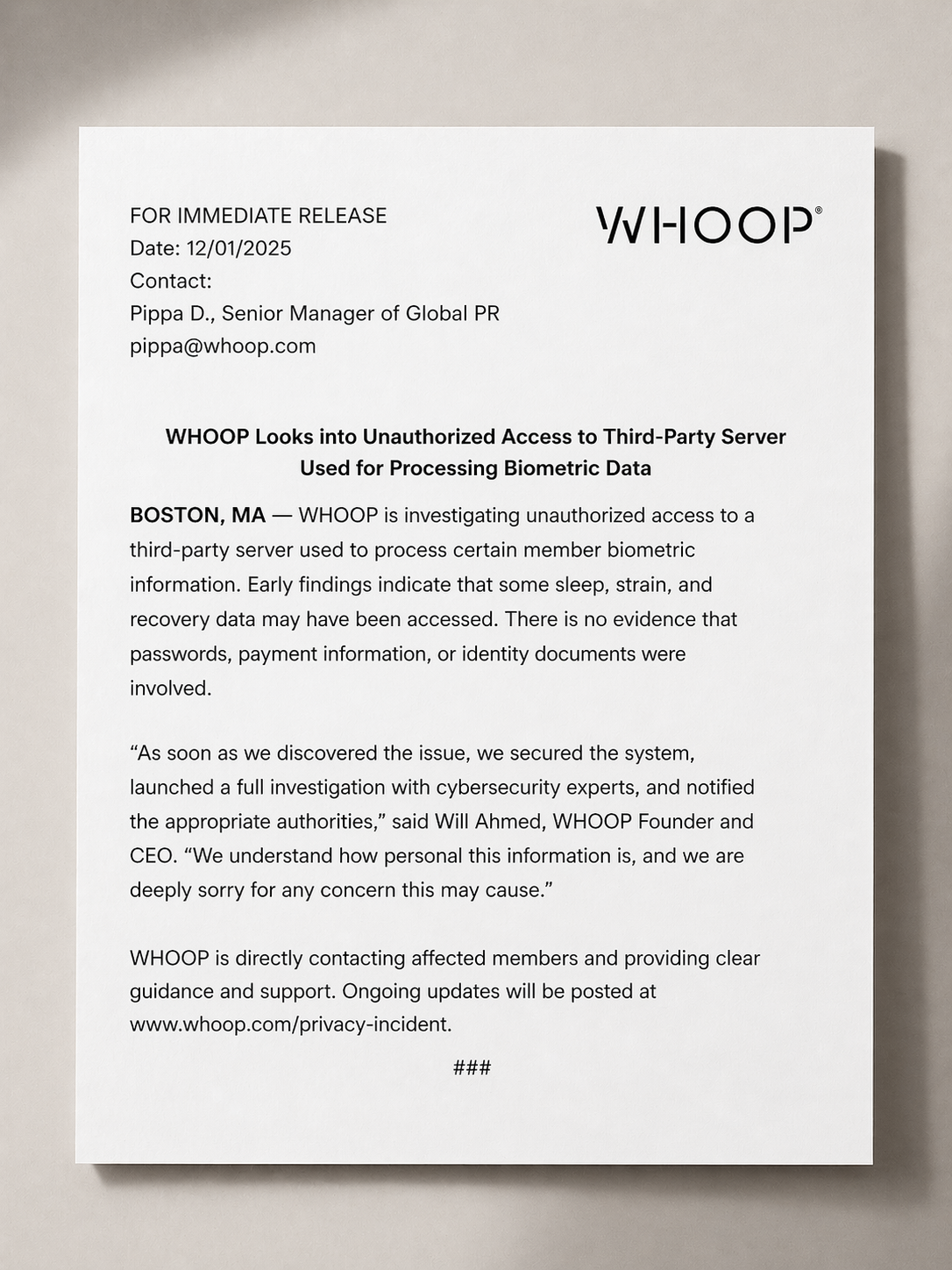

Messaging
Simple, consistent, and empathetic messaging keeps communication clear while reinforcing trust and accountability.

Structure
A clear, step-by-step framework ensures quick decision-making and organized communication during high-pressure situations.

Multi-Channel Strategy
Using press, social media, and direct communication ensures all audiences are reached effectively and simultaneously.
CONCLUSION
This project reinforced my ability to use typography and layout as the primary drivers of visual communication. By working within a structured grid system while still exploring expressive compositions, I learned how to balance clarity with creativity. It also deepened my understanding of how type can shape hierarchy, guide the reader, and tell a story without relying on imagery.
Overall, this experience strengthened my confidence in editorial design and showed how thoughtful design decisions can transform traditional content into something modern and engaging.